ABRAHAM LINCOLN
When children flipped turtles onto their backs, young Abraham Lincoln refused to participate, and wrote a school essay condemning the mistreatment of animals. He knew causing suffering to the defenseless was wrong.
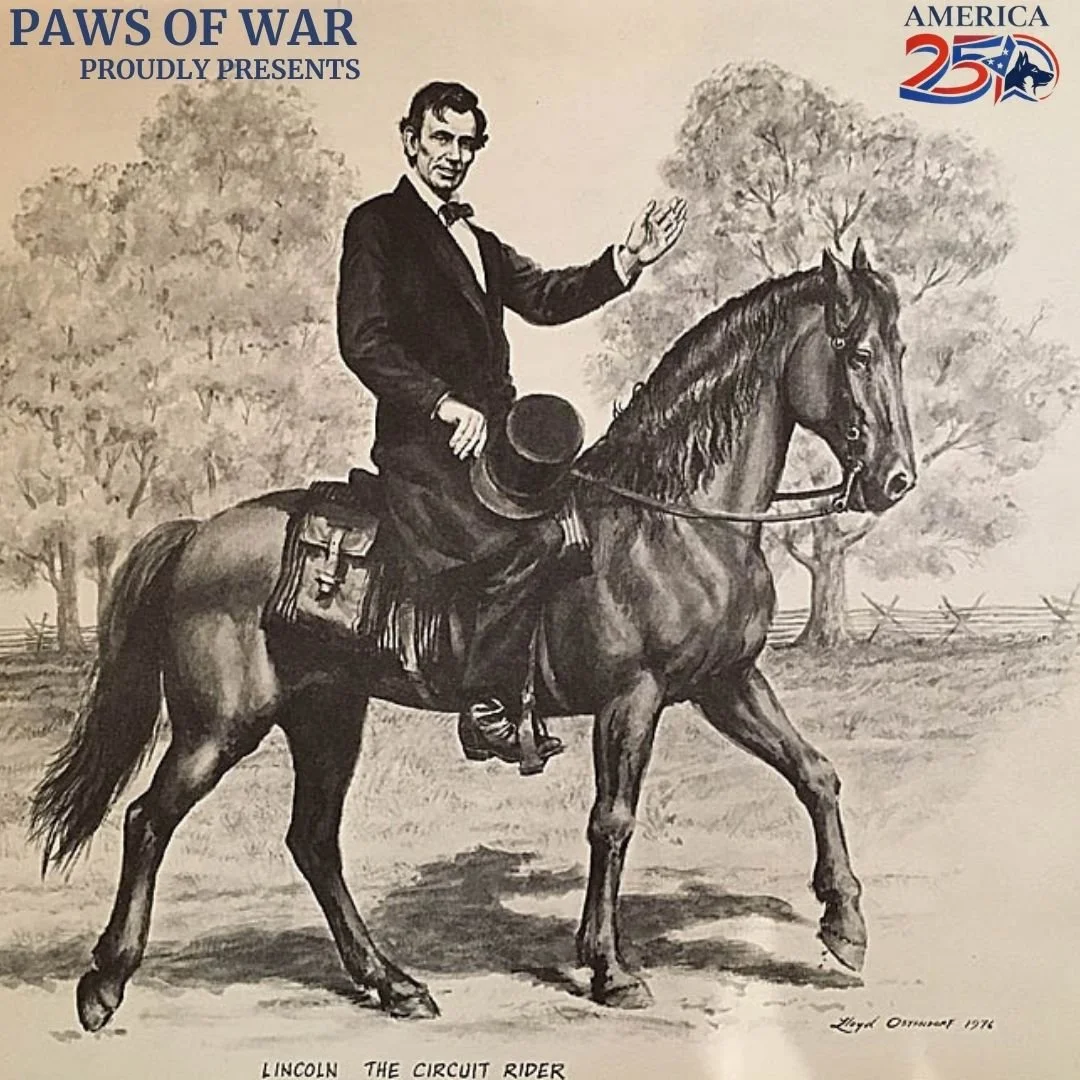
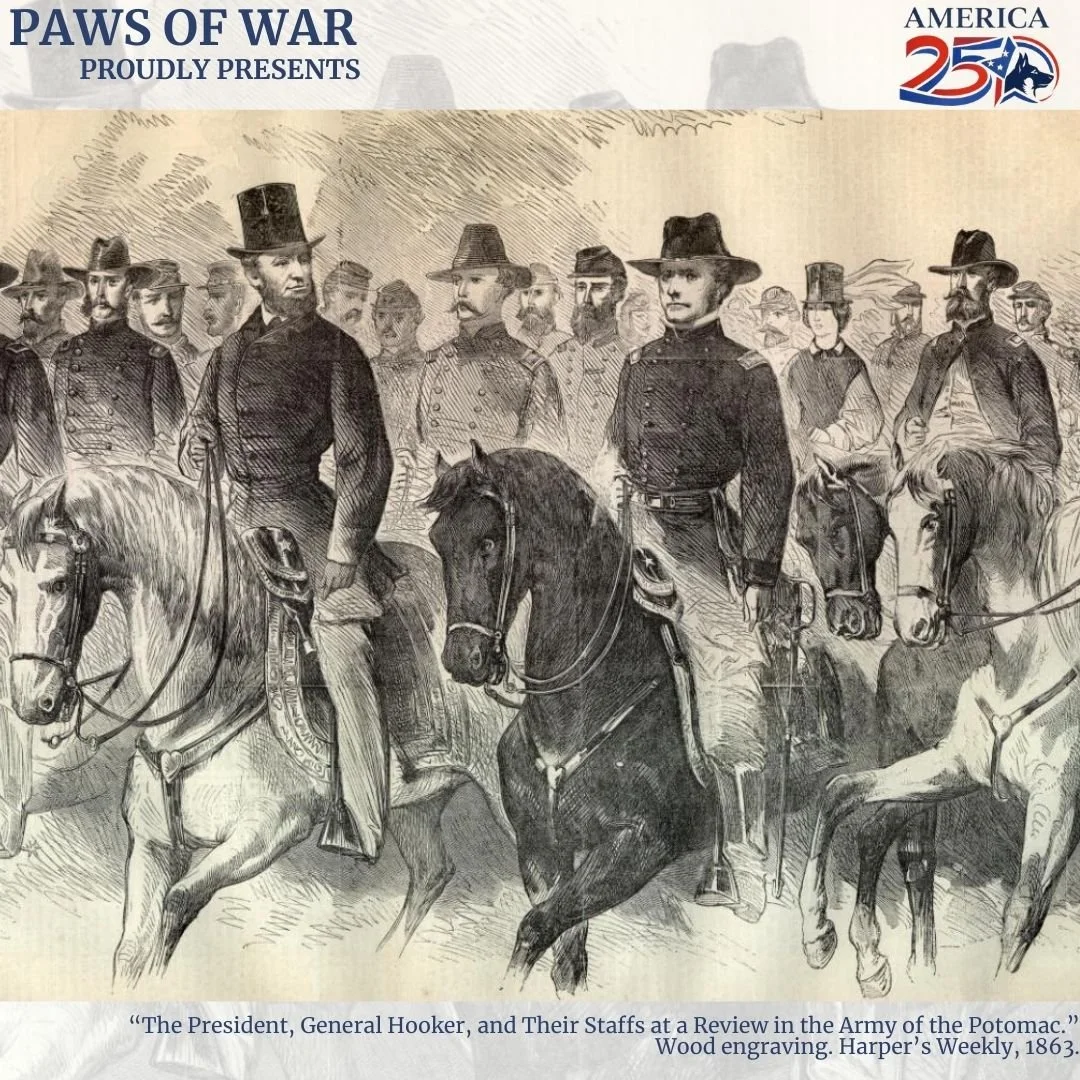
Lincoln’s love of animals throughout his life became a source of comfort. During his presidency, he was known to spend time with animals, finding in them steadiness and peace. His connection to horses was both personal and strategic.
When Confederate forces captured Union soldiers and horses, Lincoln said, “Well, I am sorry for the horses. I can make a brigadier general in five minutes, but it is not easy to replace a hundred and ten horses.”
Officers could be appointed. Horses could not be so easily replaced.
In 1863, Lincoln urged the horse mounted troops come together under one unified command because they had been divided, and horses were overworked and lost. By centralizing, Lincoln helped improve the Union’s mobility and performance.
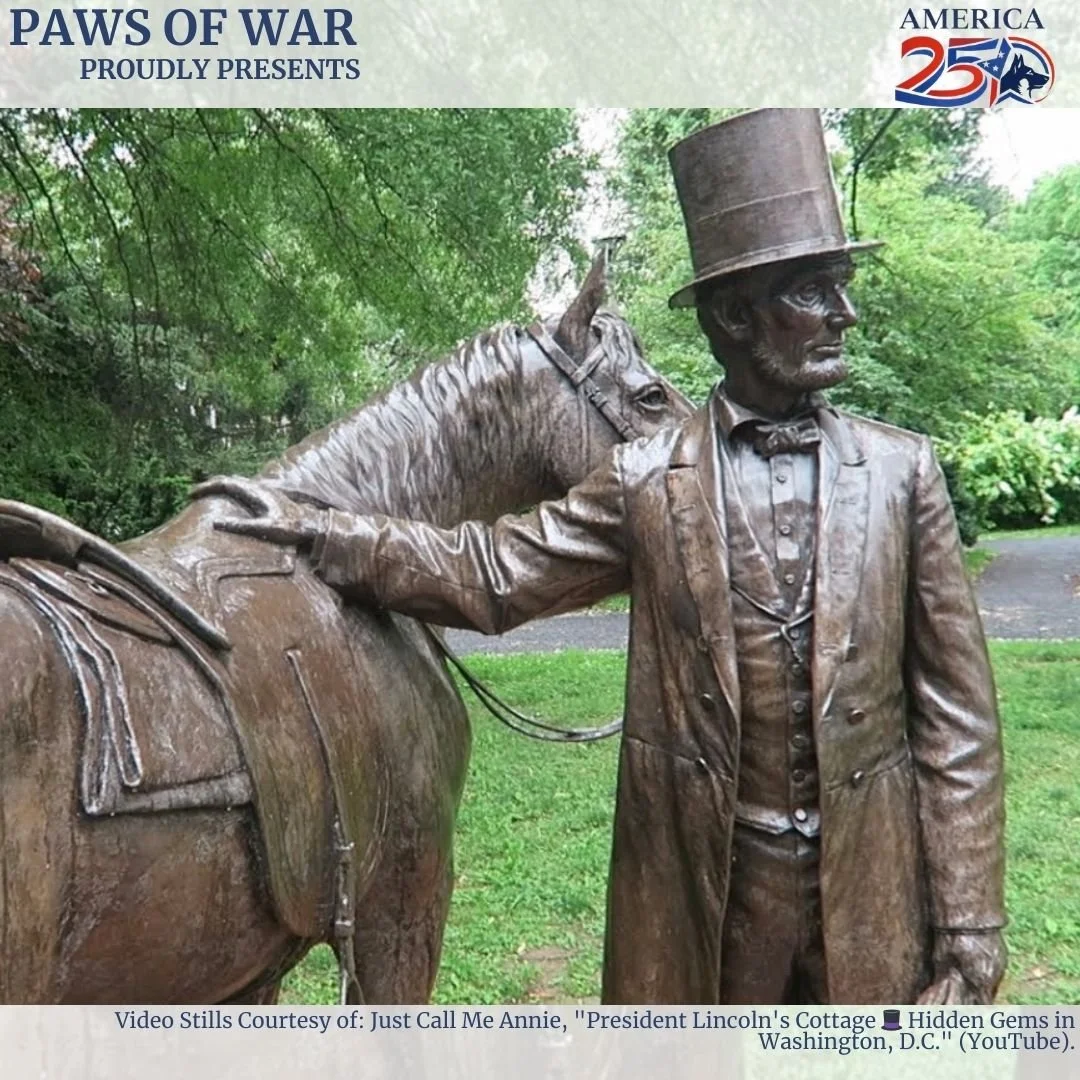
Lincoln often rode his horse 3 miles to the White House, finding quiet reflection while leading a nation. The bronze statue shown immortalizes those journeys, when horse and rider moved through uncertain times.
Lincoln’s compassion was instinctive. When the White House stables caught fire and horses were trapped inside, he rushed toward the flames and had to be restrained from entering the building.
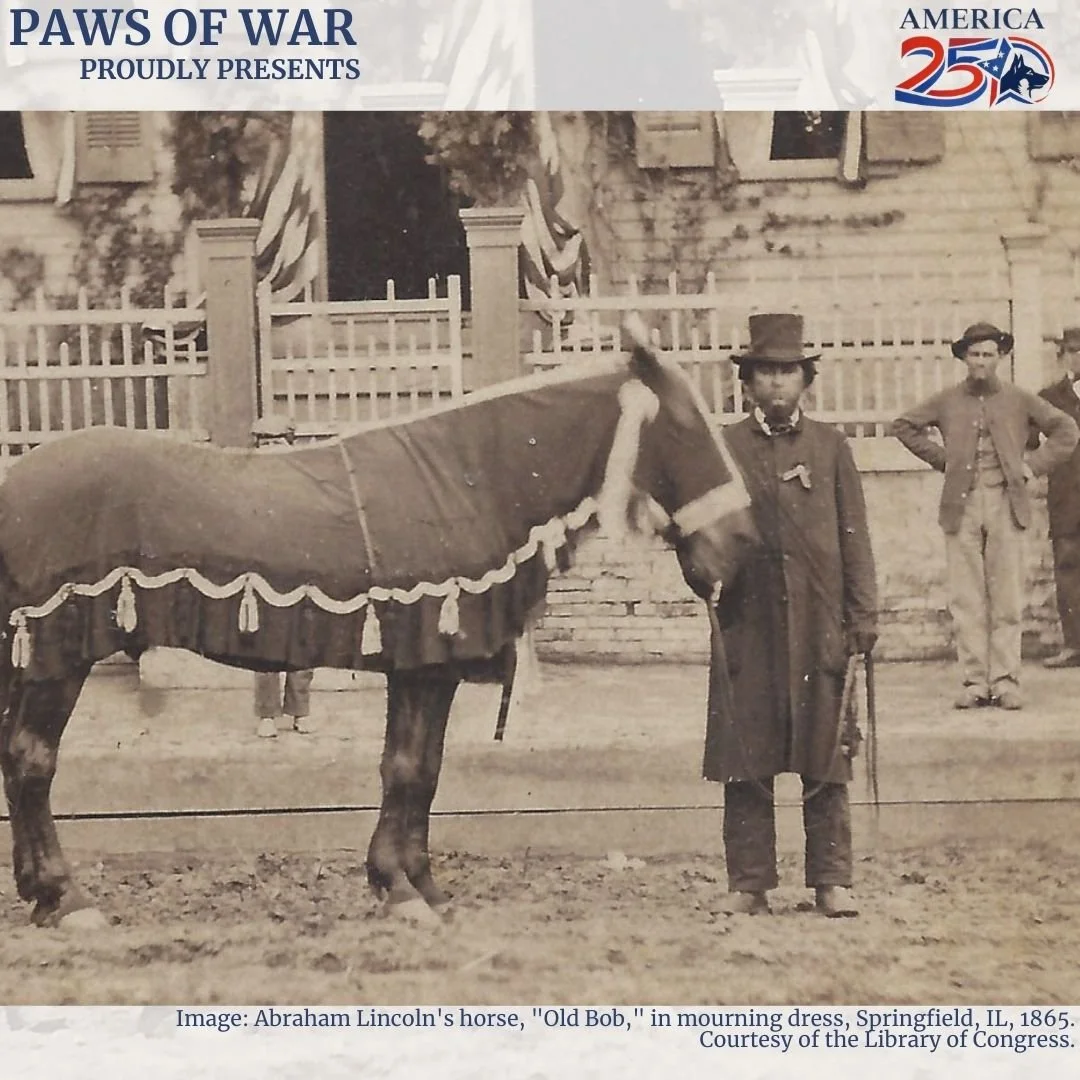
Even appearing at Lincoln's funeral, his beloved horse followed behind the hearse, draped in black mourning cloth. It was a final act of loyalty from the animal who had carried him through life.
Lincoln’s life reminds us that compassion toward animals has always been part of America’s 250 years of history.
At Paws of War, we remove dogs and cats from war torn regions overseas and uncertain corners here at home and placing them to the arms of our nation's heroes. Through our Humane Warriors initiative, we stand in the gap for horses on their final road to slaughter and giving them back their dignity and their future.