
AS AMERICA APPROACHES THE 250TH ANNIVERSARY OF THE DECLARATION OF INDEPENDENCE, PAWS OF WAR SALUTES THE COURAGEOUS DOGS WHO STOOD BESIDE OUR SOLDIERS AND HELPED SHAPE OUR NATION’S HISTORY.
Across distant battlefields, Paws of War delivers dogs home to America, reuniting soldiers with the loyal companions who became family in war. This mission is rooted in a long history of dogs serving beside our troops, offering loyalty, comfort, and a sense of home in times of war.
By looking back at the dogs who served before them, we will honor a legacy that continues today and bring these powerful stories to life through authentic historical recreations at events across the country.
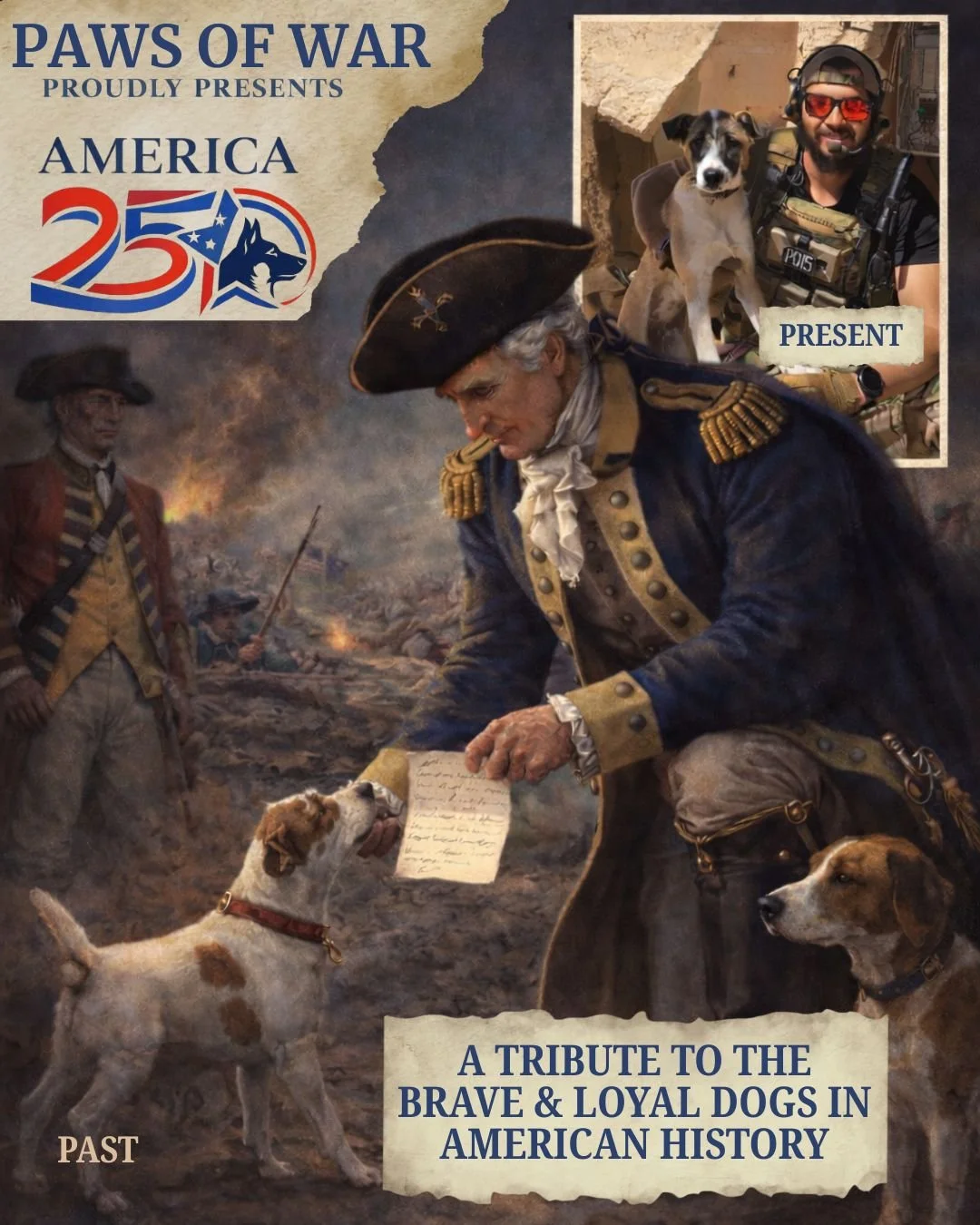
Our tribute begins in 1777 with the Revolutionary War story of an extraordinary act of compassion. After British General Howe had a victory on a Pennsylvania battlefield, his beloved fox terrier, Lila, wandered into the American camp. Her collar revealed that Lila belonged to the British enemy.
Though defeated, General George Washington, who marched into battle alongside his own dog, Sweet Lips, understood the pain Lila’s disappearance caused his adversary.
Washington’s compassion rose quietly above the noise of war. He ordered that Lila be fed and gently groomed, treated not as a prize of war but as a beloved companion. Guided by empathy for a fellow dog owner, he arranged a temporary ceasefire so Lila could be returned safely across enemy lines.
He sent Lila back with a handwritten note: “General Washington’s compliments to General Howe, does himself the pleasure to return him a dog, which accidentally fell into his hands.”
In the midst of catastrophic war, this moment revealed a shared tenderness rooted in the bond between people and dogs. That enduring spirit is what drives the mission of Paws of War today.
Join us for this year-long celebration honoring the dogs who have stood beside our soldiers across centuries. Then and now, these dogs offer solace, steadfast devotion and a reminder of home during war, making their safe return not just important, but essential to the mission of Paws of War.
featured stories
HONORING THE ROLE OF HORSES
[Read More]
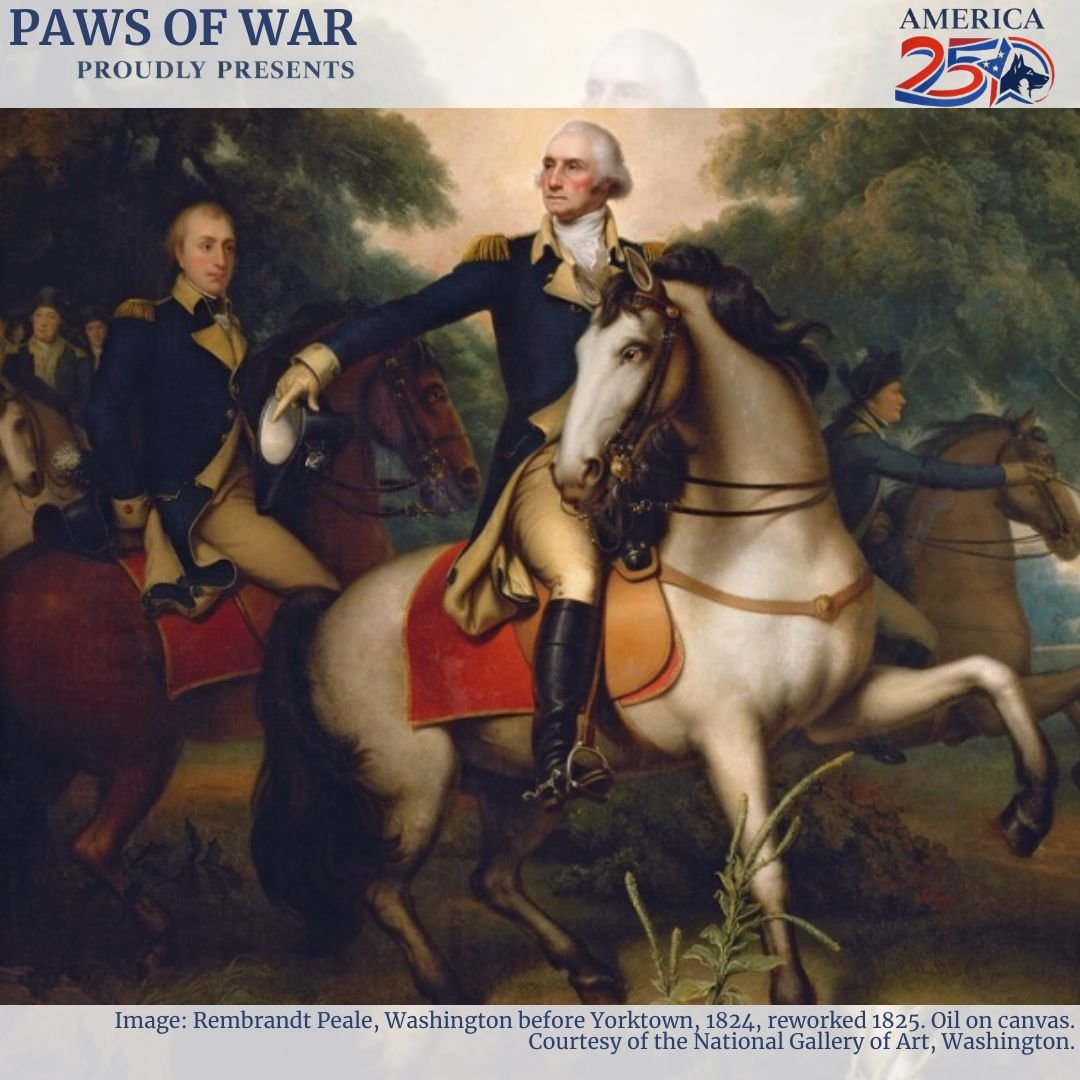
During the French and Indian War, George Washington confronted the real possibility of death while leading from the saddle of his horse. Four musket balls pierced his uniform. At only 23 years old, he was reminded that his life could rest in the strength and steadiness of the horse beneath him.
In war, Horses were vital to survival, movement, and morale. The very sight of Washington atop his mount inspired his troops. When defeat seemed imminent, horse and rider would move to the front lines, rallying men in moments of fear and…
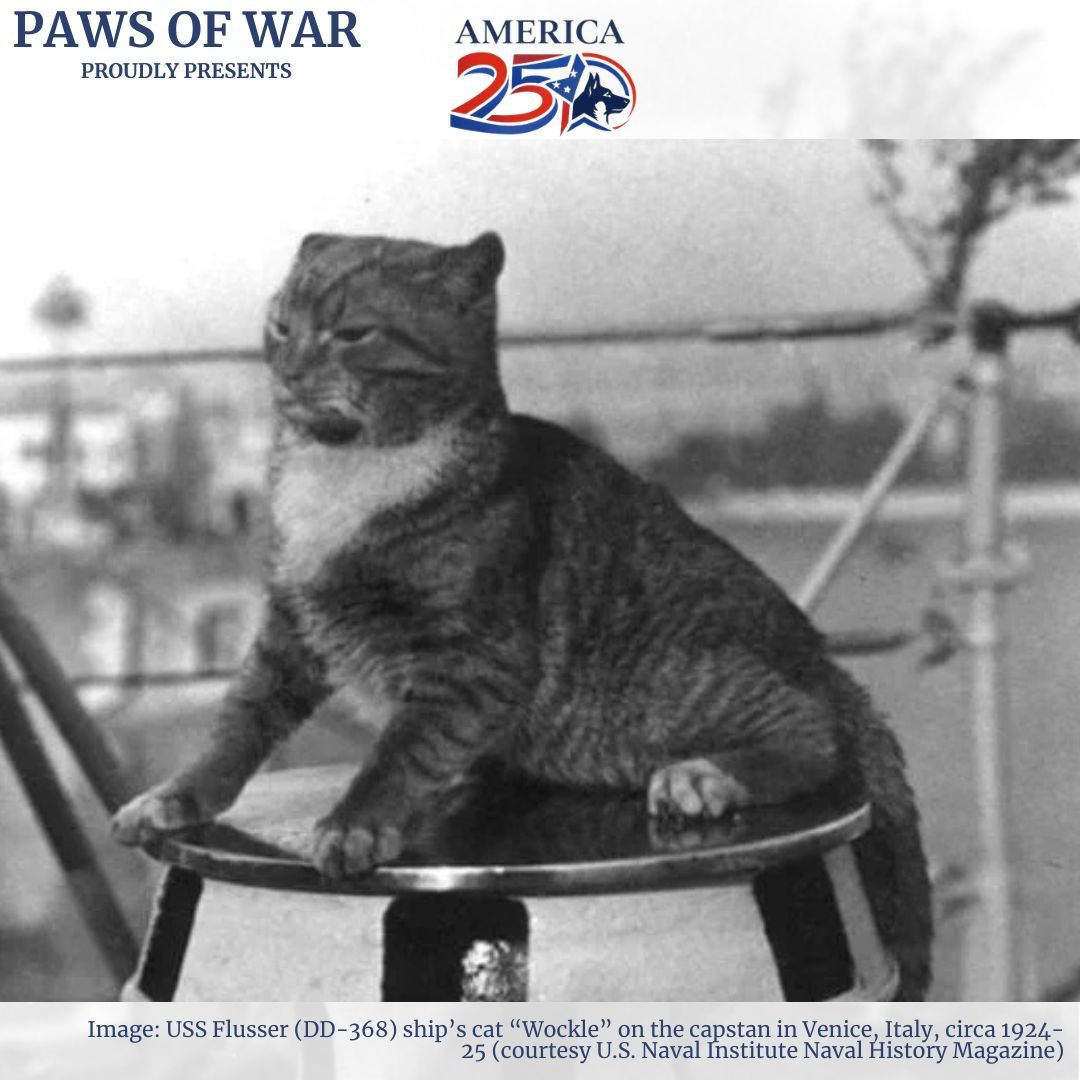
cats of the revolution
[Read More]
History often focuses on the "war dogs," but today we’re honoring the stealthy, whiskered guardians who served in the American Revolution and the War of 1812.
During the brutal winter stay at Valley Forge, George Washington’s troops faced threats as deadly as the British Army: starvation and disease. Rodents were ravaging the Continental Army's dwindling food supply. Washington, who valued cats as much as his hounds, stationed felines at headquarters and supply huts. They were the only effective defense against the pests threatening to eat the army’s meager rations…
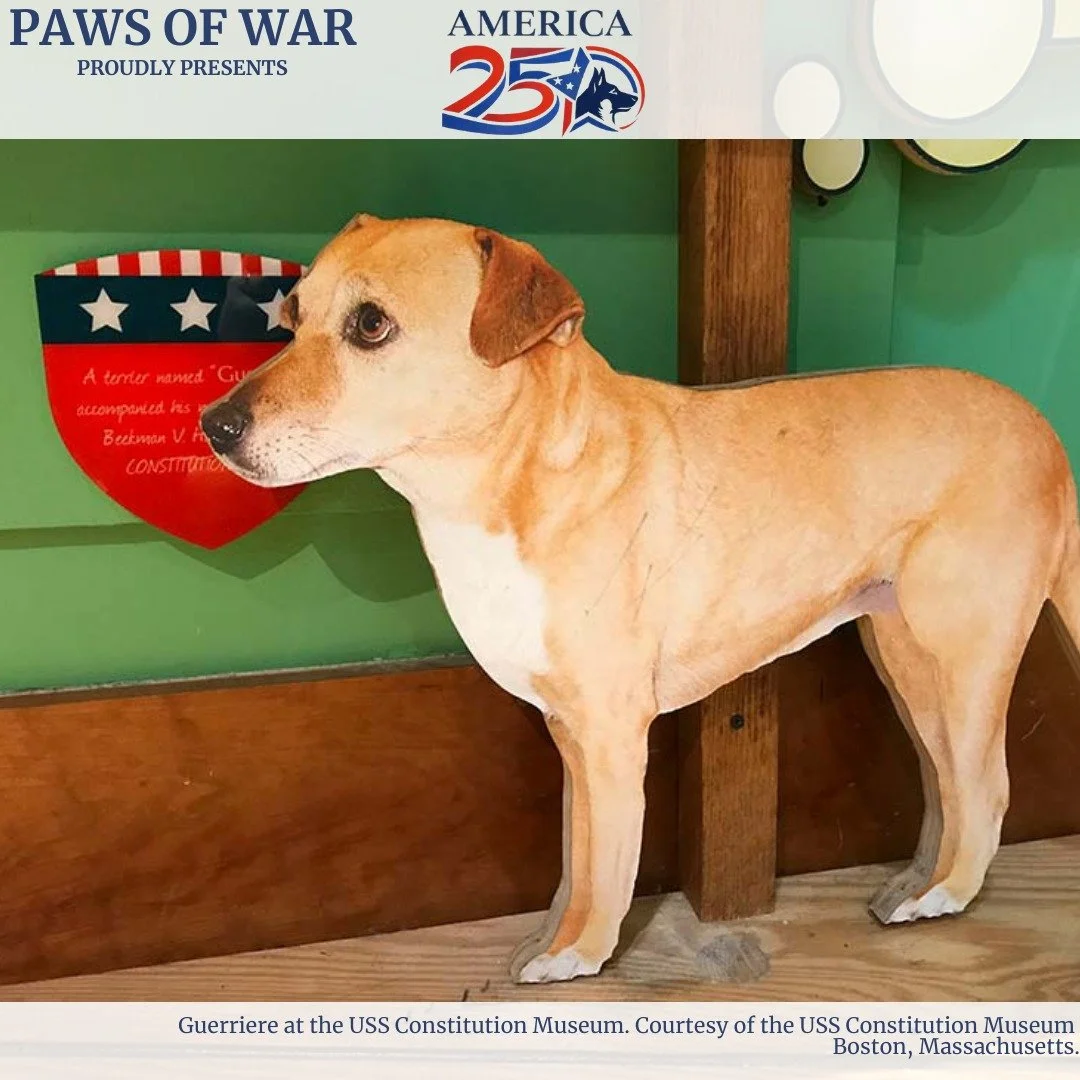
The loyalty of Guerriere
[Read More]
The USS Constitution had a secret weapon during the War of 1812. His name was Guerriere, an energetic terrier with keen senses. Beyond catching rats and helping sailors pull lines, Guerriere saved the ship from a potential ambush. On February 13, 1815, he sensed a large frigate lurking in the distance that the lookouts had completely missed.
By acting "uncommonly frisky and troublesome" (according to an account written by the ship's chaplain), he got an officer's attention. Then he took to the ship's…
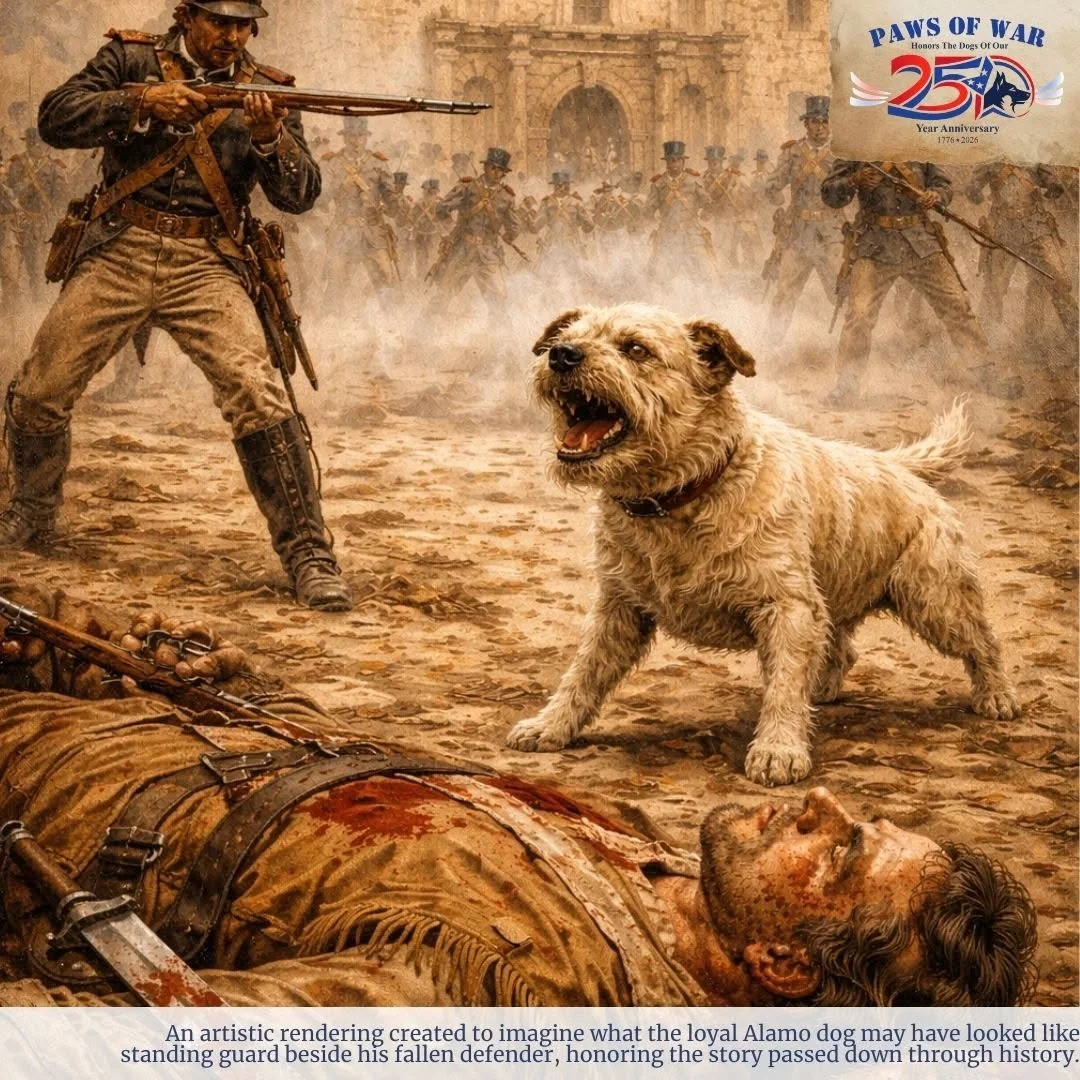
Lone Survivor: The Alamo Dog
[Read More]
The Battle of the Alamo had one single survivor on the Texian side? It wasn't a soldier...
Most know the story of the 1836 siege. American settlers, known as Texians, were seeking independence from Mexico and had taken control of the old Spanish mission in San Antonio called the Alamo. In early March, thousands of Mexican troops under General Santa Anna laid siege to the mission, where an estimated 185 to 260 defenders including Jim Bowie and Davy Crockett vowed to fight to the death despite inconceivable odds stacked against them. And they did...
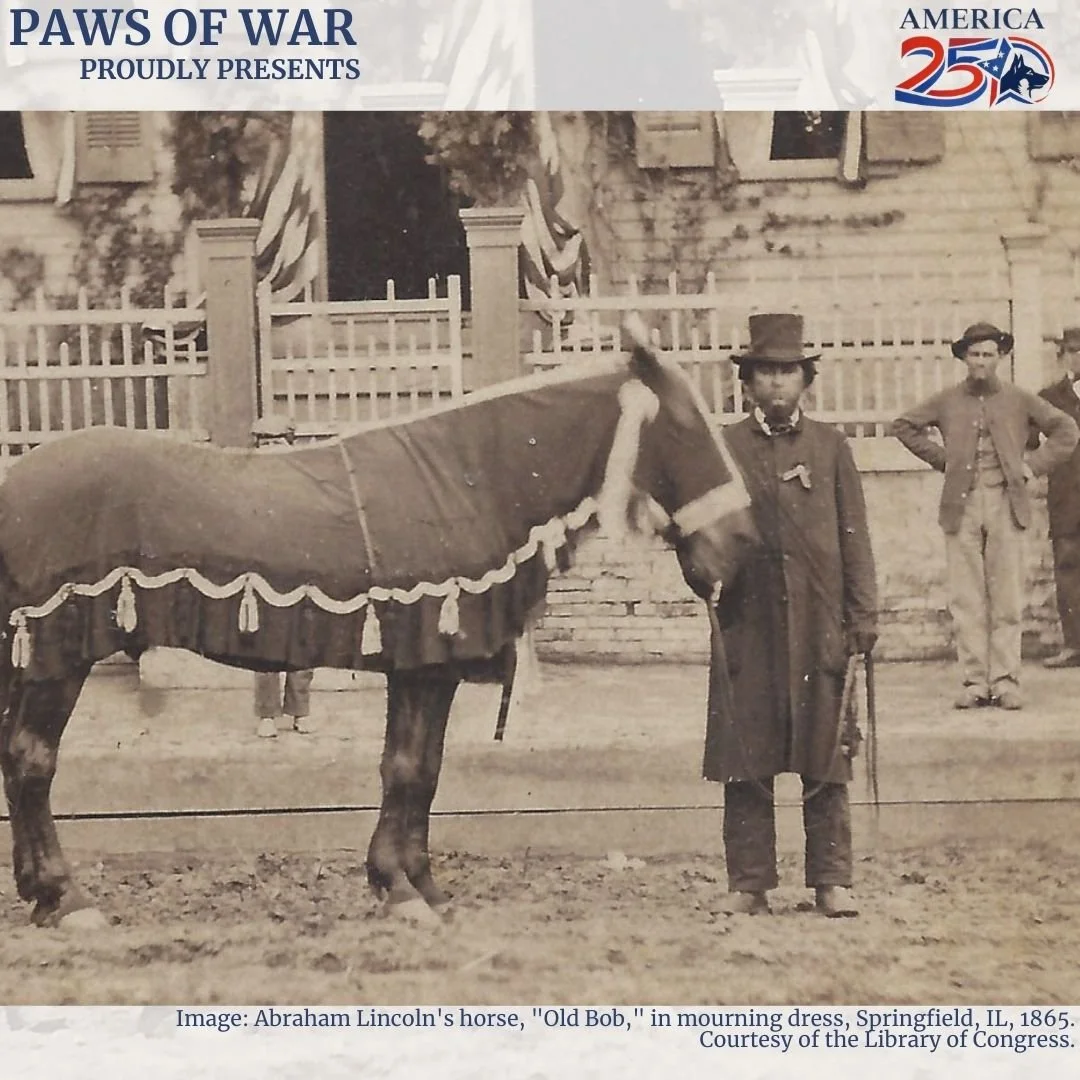
ABRAHAM LINCOLN
[Read More]
When children flipped turtles onto their backs, young Abraham Lincoln refused to participate, and wrote a school essay condemning the mistreatment of animals. He knew causing suffering to the defenseless was wrong.
Lincoln’s love of animals throughout his life became a source of comfort. During his presidency, he was known to spend time with animals, finding in them steadiness and peace. His connection to horses was both personal and strategic. When Confederate forces captured Union soldiers and horses, Lincoln said…
THE ETERNAL SOLDIER
[Read More]
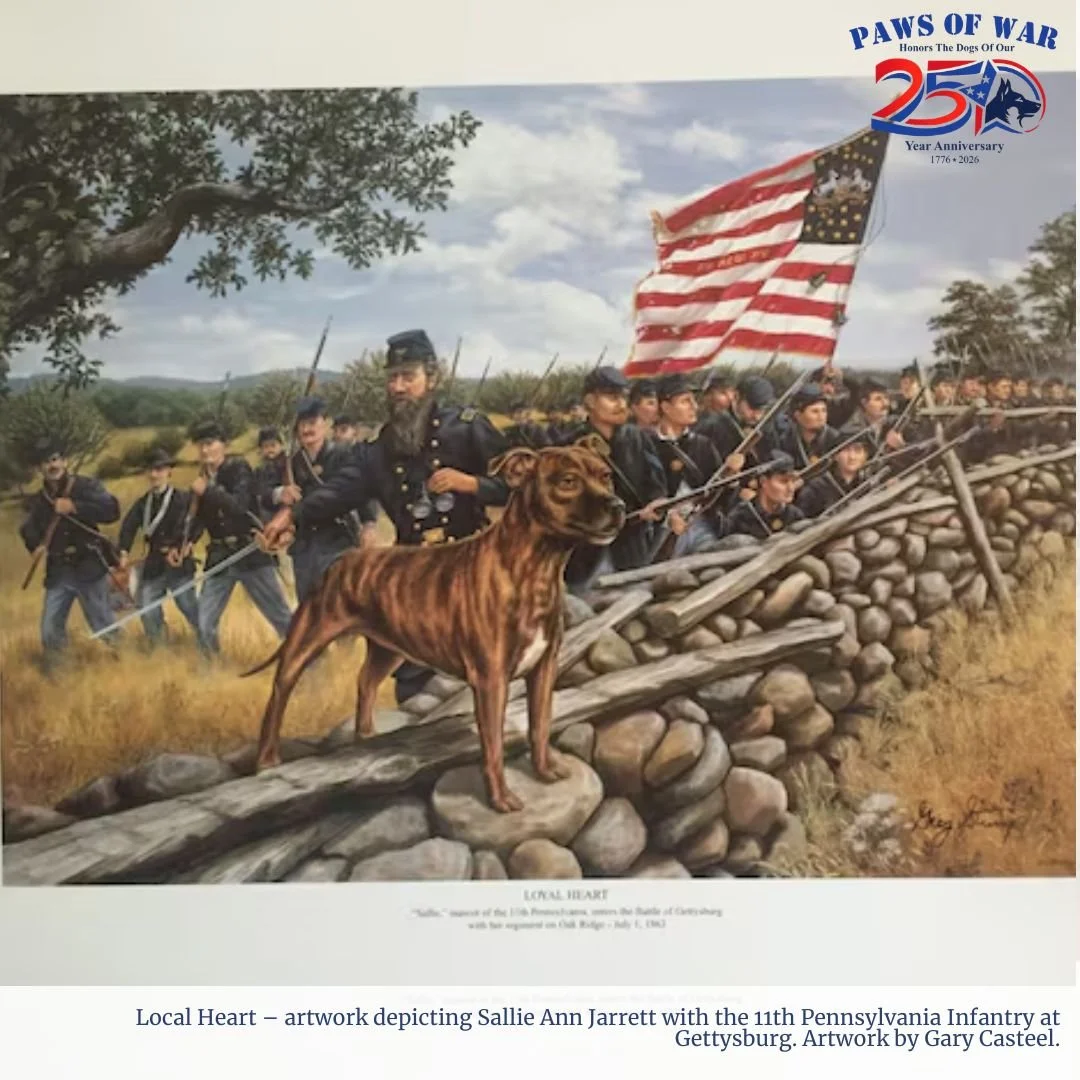
Long before monuments and history books, a small brindle dog named Sallie marched straight into Civil War battle and refused to leave her soldiers.
Among the most relentless combatants of the Civil War was a brindle Staffordshire terrier named Sallie. As the mascot of the Union Army’s 11th Pennsylvania Infantry, she saw action throughout almost the entire war. Sallie accompanied Union soldiers into fierce combat at Cedar Mountain, Antietam, Fredericksburg, Chancellorsville, Gettysburg, the Wilderness, and other battles. She marched on the front lines…
THE COURAGE OF A HORSE
[Read More]
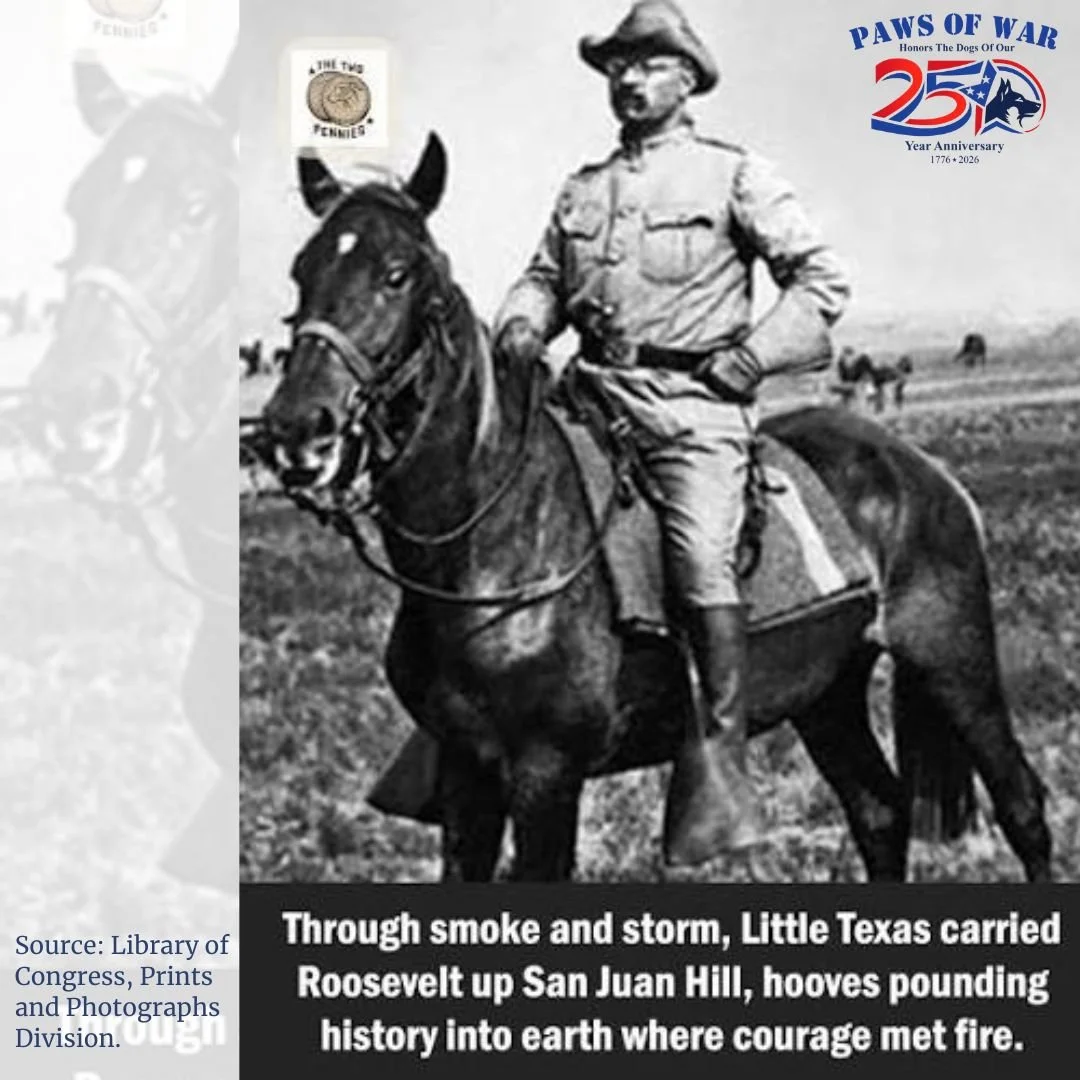
While under relentless sniper fire, Colonel Theodore Roosevelt shouted a command that would echo through history: “Charge the hill!” Behind him, the men surged forward as the future President rode his horse, Little Texas, straight up the Heights. Bullets tore through the air, and soldiers fell around them, but the fearless horse carried his rider onward, climbing to within 40 feet of the crest before a second barbed-wire fence stopped their advance.
Roosevelt dismounted and began cutting through the wire when a bullet struck his left elbow. Wounded but unbroken, he fought the rest of the way on foot…
Sergeant Stubby’s Purple Heart
[Read More]
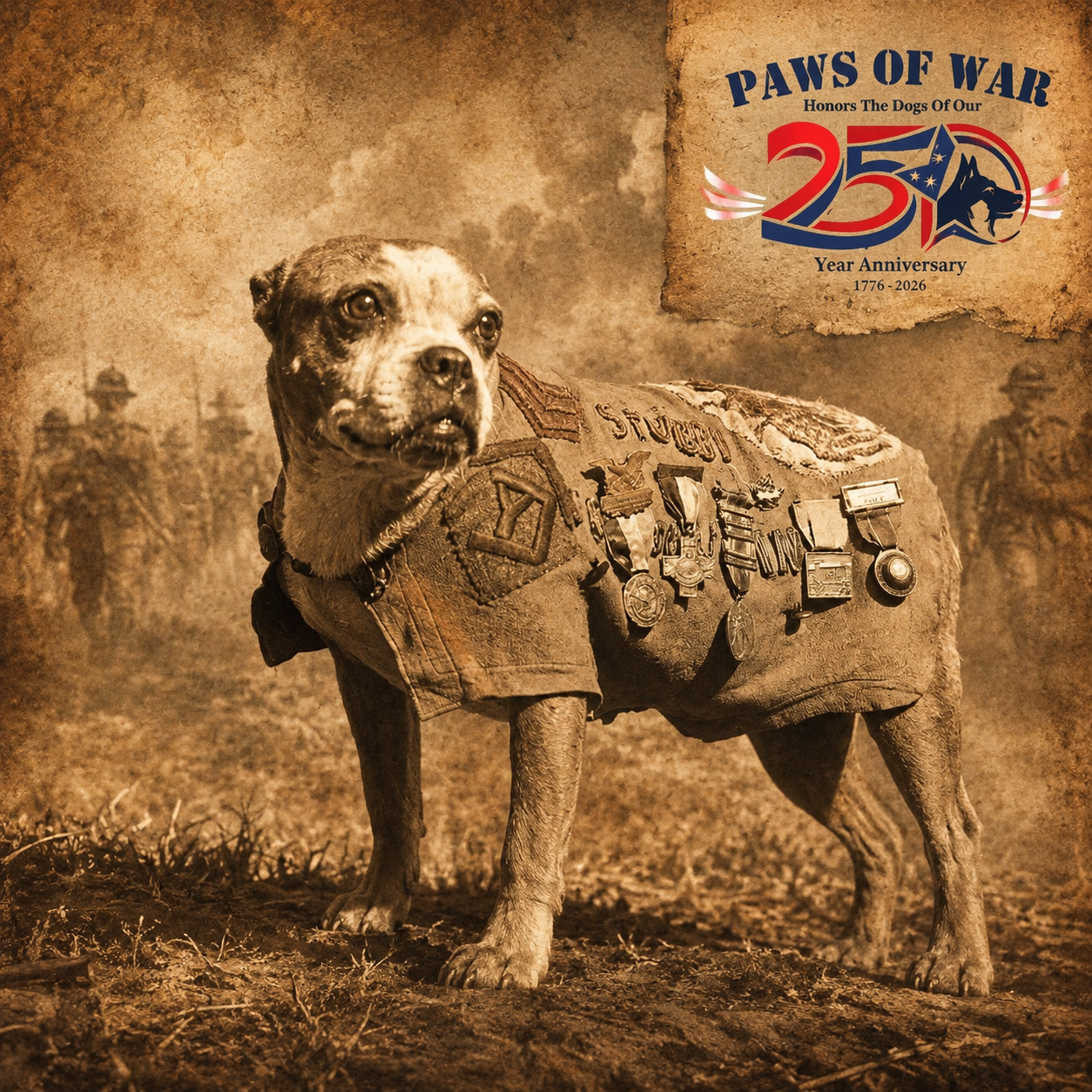
As we continue celebrating the historic dogs who helped shape our great nation and honoring the four-legged heroes of America’s 250th Anniversary, we turn our attention to Sergeant Stubby, one of the most decorated dogs in American military history.
A tiger-striped stray who stowed away on a troop ship to France, Stubby became the subject of one of the most extraordinary military service stories ever told. Fighting alongside the 102nd Infantry during World War I, he saw action in 17 battles and…
THE MOST DECORATED DOG OF WWII
[Read More]
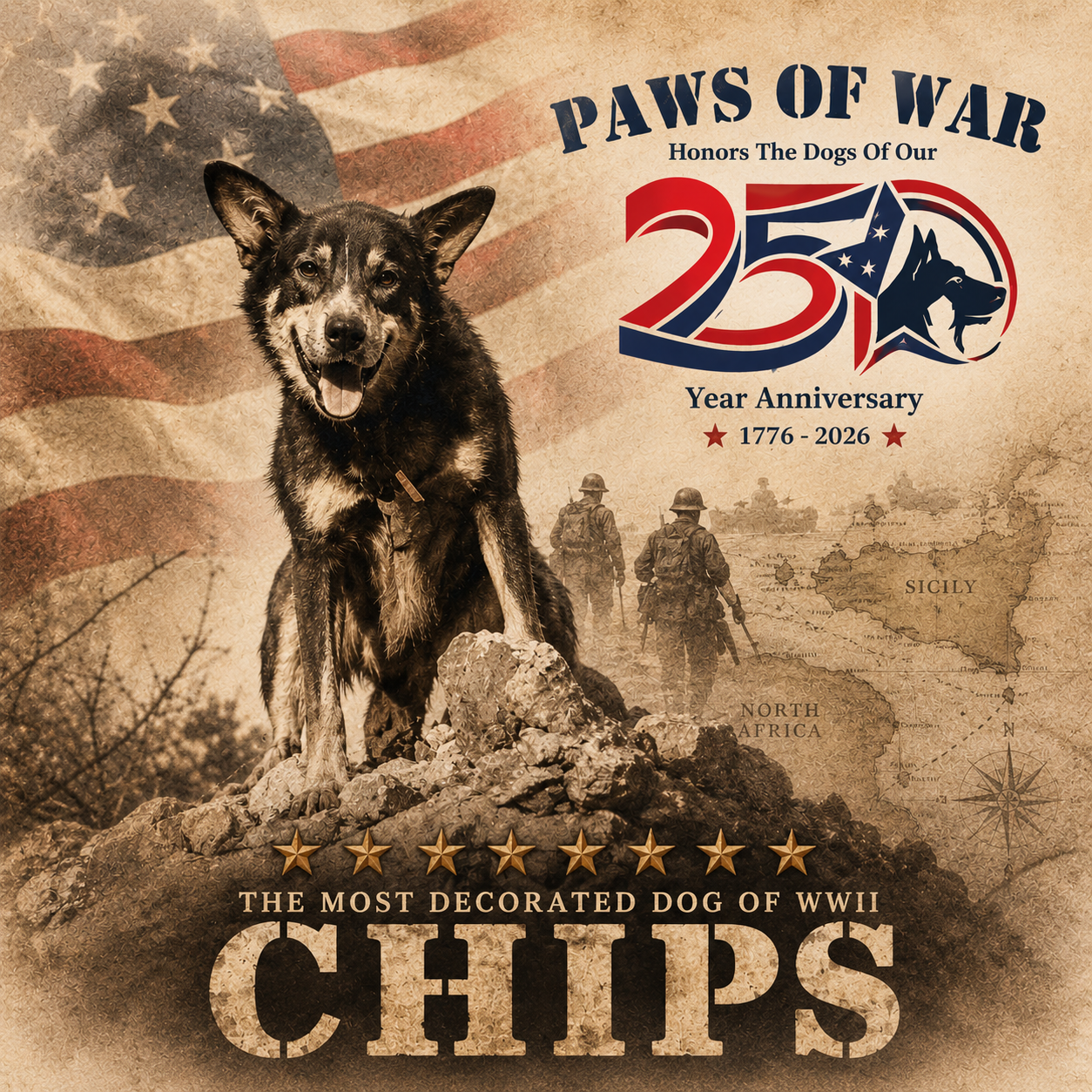
Dogs have served America's military in so many ways ever since the Revolutionary War. Whether taking an active part in battles, acting as sentries, sniffing out explosives, detecting mines, guarding the wounded, attacking enemy forces, or serving as companions to troops stationed overseas, their service has been invaluable. Paws of War is saluting these animals as part of our tribute to the nation's 250th anniversary of independence. One such dog is Chips, the most decorated canine to serve in World War Two. A German Shepherd/Collie/Husky-Malamute mix, Chips was one of approximately 1,900 dogs donated by…
CANINE COMBATANTS of the korean war
[Read More]
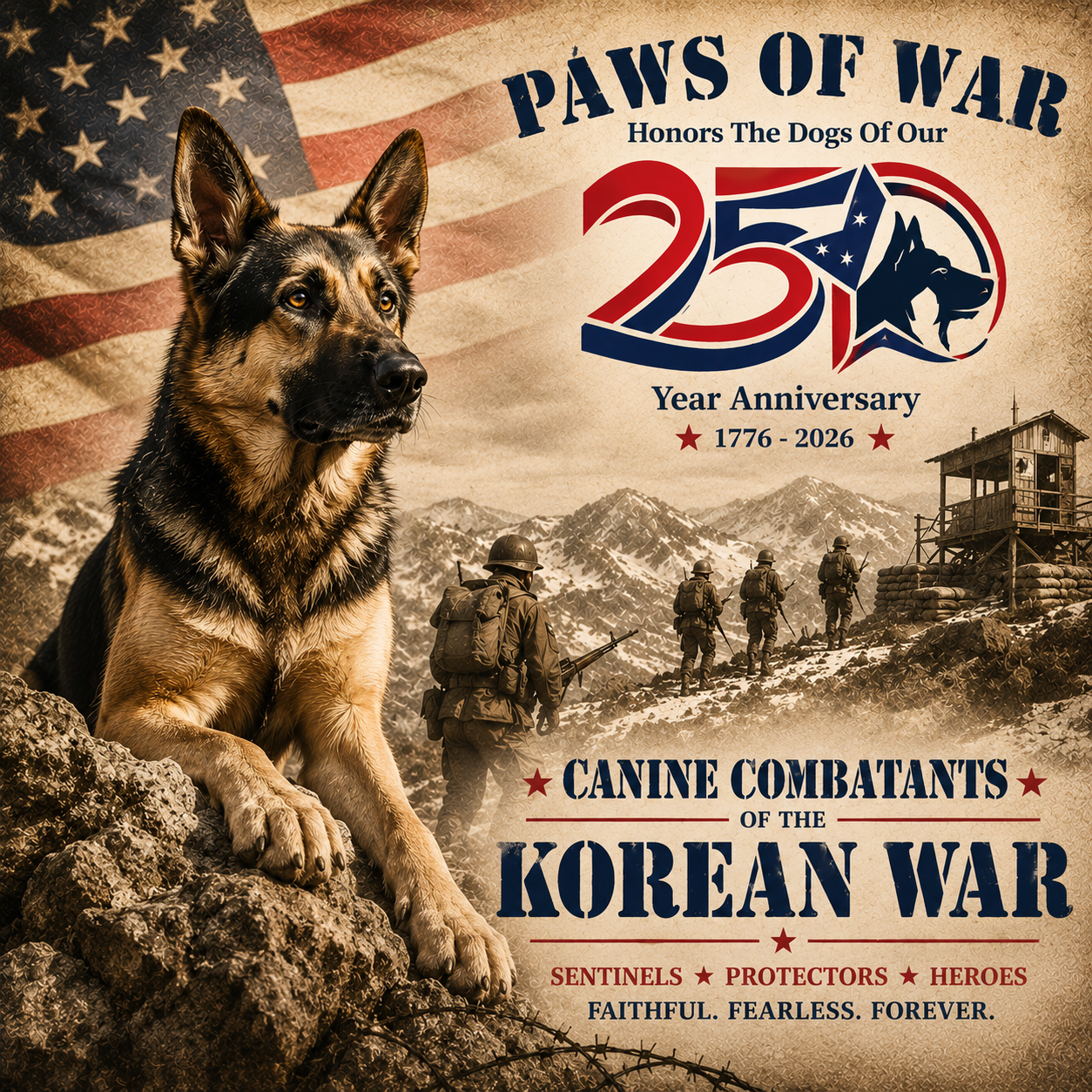
What force was responsible for a 65% reduction in casualties incurred by American patrol units during the Korean War? It was the 26th Scout Dog Platoon, whose brave canines have become legendary. As Paws of War pays tribute to our nation's 250 years of independence, we are looking back at their service in defending our troops in the monumental battles with North Korea and China during that heavy-casualty war.
Conducting over 1,550 combat patrols, these dogs fiercely guarded their human counterparts by serving as sentries — silently warning during patrols and at…
VIETNAM WAR: CELEBRATING THE THOUSANDS LEFT BEHIND
[Read More]
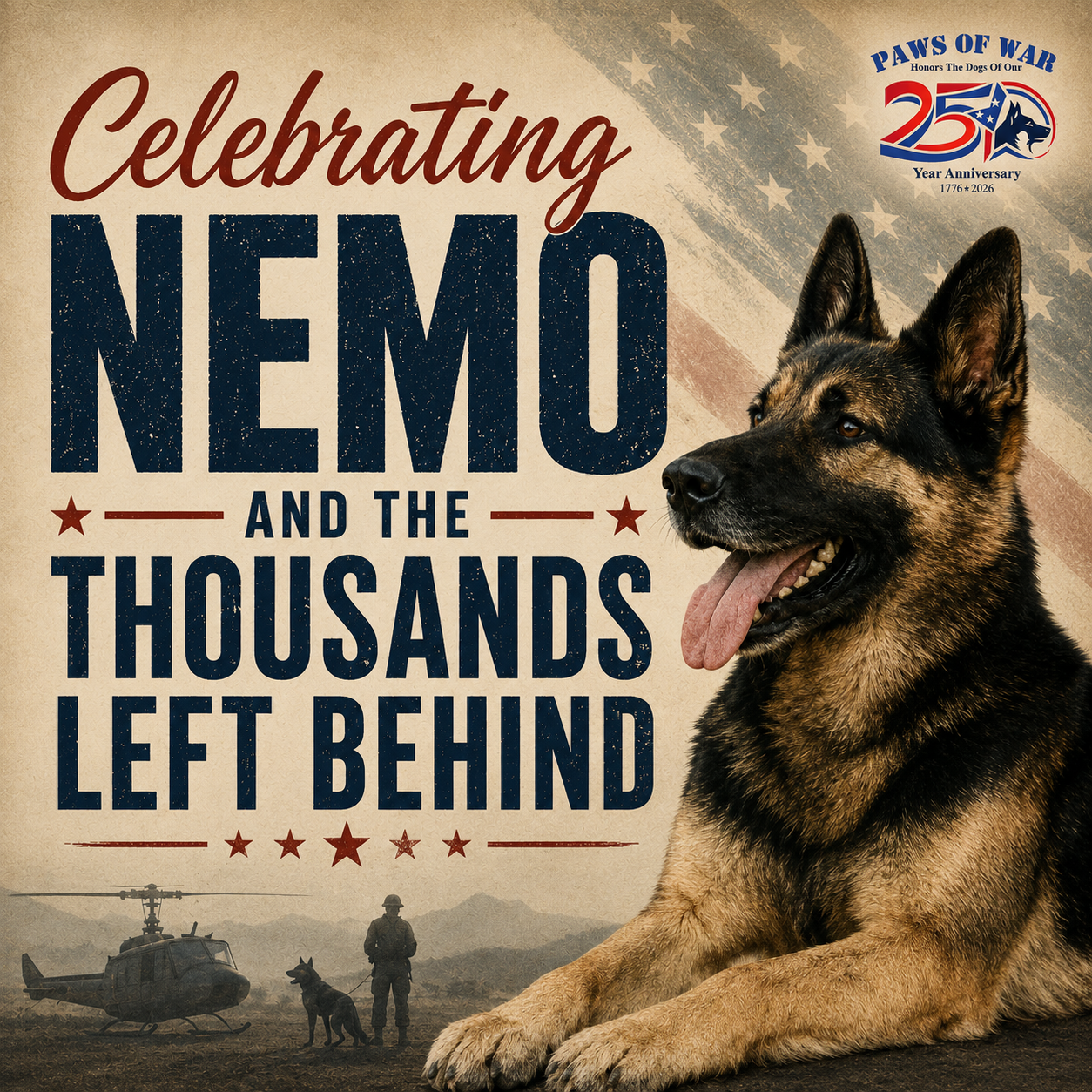
The Vietnam War marks the last major conflict in which American military dogs were left behind. Approximately 4,000 to 5,000 dogs served during the war, yet only 200 to 300 made it back home. Paws of War is dedicated to ensuring that no animal—whether a working military dog or a stray adopted by a service member overseas—is ever left behind.
The passage of Robby's Law in 2000, enacted after years of advocacy and outrage from military dog handlers over the fate of these animals, changed that legacy..
DOGS OF WAR AND PEACE
[Read More]
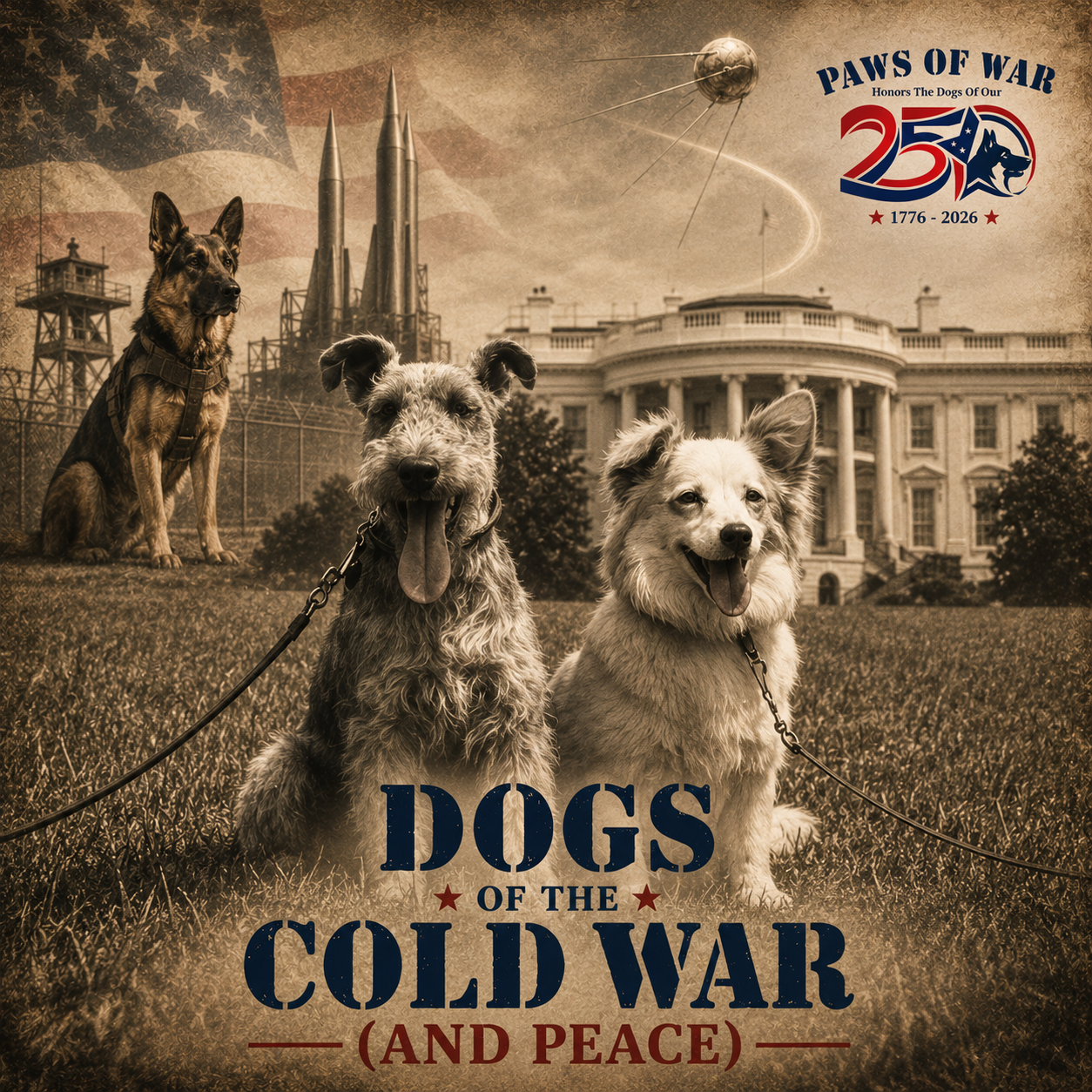
Dogs played essential roles in defending America during the perilous era when the threat of nuclear war with the Soviet Union imperiled the world's very existence.
At our overseas bases and on the home front, dogs played a key role in protecting America. Thousands of sentry dogs were put to work by the U.S. Air Force guarding nuclear missile silos, bomber flight lines, and Strategic Air Command bases. Air Commando Dogs (German Shepherds and Dobermans) served a psychological and physical deterrent role in classified military zones. Trained to detect…
Dogs of the Gulf War
[Read More]
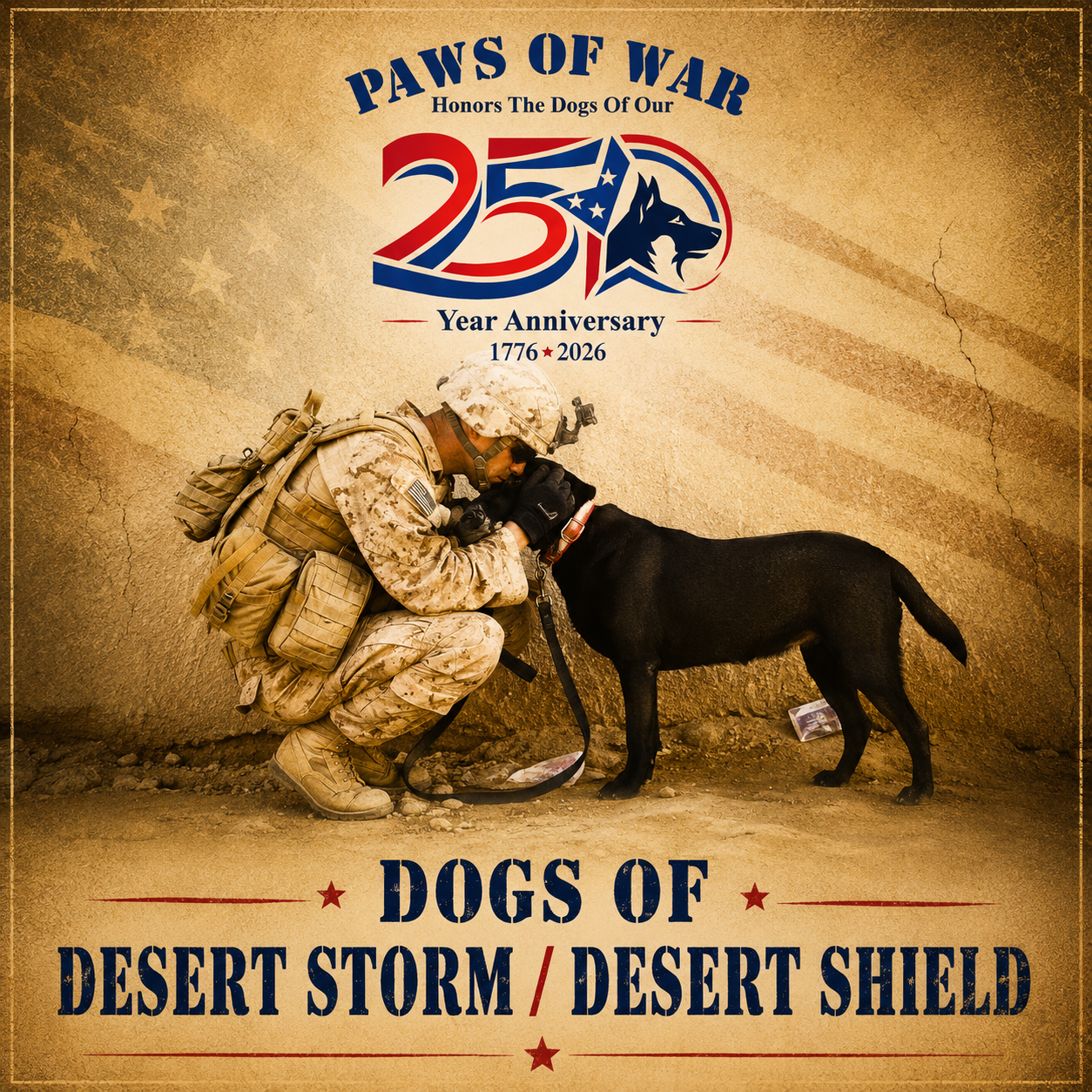
In 1990, in what's been called either the Gulf War or Operation Desert Shield/Operation Desert Storm, America built a coalition of allies to oppose the brutal dictatorship of the Iraqi dictator, Saddam Hussein, who had invaded Kuwait, a peaceful neighbor. Leading the way, literally, for the troops sent to force the Iraqi Army out of Kuwait were 118 Military Working Dog (MWD) teams.
Army Explosive Detection Dogs were at the forefront of advancing columns, detecting mines buried in the desert sands and weapons stockpiles that were…
military working dogs of the Afghanistan war
[Read More]
As Paws of War honors America's 250 years of independence, we've been telling the stories of animals involved in our military history. We’ve come to the multi-year, conflict that cost the lives of 2,459 US military personnel between October of 2001 and August of 2021. The war with Afghanistan marks the inception of the organization's efforts to find, rescue, and reunify the animals our troops initially found and bonded with while overseas -- and would otherwise have been forced to leave behind…
animals of the iraqi war
[READ MORE]
From the Revolutionary War through the years-long conflict in Iraq, animals have served our troops with steadfast bravery. And, Paws of War has been supporting our active-duty service members, vets, and first responders -- and animals -- since our inception in 2014. In honor of the America 250 celebration, we've been paying tribute to those animal heroes who have been so crucial in our war efforts. The variety of animals and the roles they played in this war speaks to how much each of several species contributed. Specialized teams of aquatic animals were deployed to the Persian Gulf during the 2003 invasion…


